STUTA
BY AUSTIN CAMILLERI
Austin Camilleri’s work for Allegoria takes as its point of departure the grand sepulchral monument of Grandmaster Nicolas Cotoner at St John’s Conventual Church by Domenico Guidi and the bronze figure of Grandmaster Antoine de Paule at San Anton Palace, created by the same Camilleri, an object historically charged with sovereignty, authority, and ritualised power. Camilleri intends to focus on the insertion of De Paule’s cape into the space of Cotoner’s monument, however, rather than reproducing the garment the artist will subject it to a process of material compression, using soot as both substance and residue to create a new work, titled Stuta. The conceptual starting point for the installation is the funerary monument to Grand Master Nicolas Cotoner by the Baroque sculptor Domenico Guidi, restored by RECOOP between 2006 and 2008. The monument stands as a powerful visual articulation of Baroque triumphalism: the Grandmaster emerges elevated above the defeated bodies of his enemies, surrounded by allegorical trophies celebrating vic tory and dominion. It is a strikingmanifestation of how power historically sought to inscribe itself into permanence through matter transforming bronze, marble and gold into instruments of immortality. The intervention establishes a contemplative dialogue with the chapel’s existing visual language, engaging themes of power, memory, material transformation and the inevitable passage of time. Within this framework, Camilleri focuses on the notion of entropy and collective memory intertwined with the gradual dissolution of form and meaning through time. This theme has long occupied the artist’s practice and surfaces repeatedly across his oeuvre. In Stuta, entropy is not merely understood as physical decay, but also as the erosion of narratives and the shifting perception of historical authority. Yet even the most imposing monument remains subject to time’s quiet but relentless agency of decay. Over centuries, the ormolu-gilded bronze bust of Cotoner became gradually obscured beneath layers of accumulated soot, dust and the chemical by-products of its own material degradation. Efflorescence and combustion residues formed a dark veil across the surface, slowly concealing the luminous image that had once proclaimed authority and permanence. In this condition, the monument inadvertently embodied the very entropy that all matter eventually undergoes. The power it sought to project was muted by the slow sedimentation of time.
Through the careful cleaning and stabilisation of the sculpture, the conservator effectively pierces the continuum of time, momentarily suspending the processes that seek to erase form and meaning. The removal of soot and corrosion once again revealed the gilded surfaces beneath, allowing the figure of the Grandmaster to re-emerge from beneath the obscuring residues of time. With this reappearance comes an intriguing paradox: the monument is both ancient and newly revealed, both historical artefact and contemporary rediscovery. Stuta positions itself precisely within this paradox, where the residues removed by the conservator become the materia prima of the artist, truth is unveiled by residue and sediment, grime and dirt. The installation does not compete with the monument, nor does it seek to reinterpret it directly. Instead, it introduces a subtle contemporary gesture that reflects on the same forces that shaped its current state: the slow accumulation of time, the obscuring of narratives, and the human impulse to intervene in order to preserve meaning. In a quasi alchemical process, Austin Camilleri seeks to capture and manipulate the ephemeral residues of time to then fuse them onto a fragile medium aimed to represent the awkward frailty of power.
Through its silent presence within the chapel, the work becomes an allegorical counterpart to the processes of conservation. If the conservator reveals what time has hidden, Camilleri’s intervention reflects on what remains unseen, layers of history, perception and interpretation that continue to gather invisibly around every object. Another layer within the conceptual framework is the presence of the two moors or rather an African and a Turk, captured slaves from the Order’s military expeditions in the Mediterranean. They are the representation of a weakened and humiliated enemy, mirrored by the Turks in their own fair share of propaganda with representations of decapitated or enslaved infidels. The absolutism of corrupt power aimed at denigrating the human being for expansion. Modern propaganda is still preoccupied with augmenting this divide amongst the people through humiliation. There is no true us and them, no good side versus bad side within the terrestrial realm. Evil deeds beyond comprehension are bound to no race, creed or colour. Hatred is nothing but weaponised fear triggered by the loss of control. Research, conservation and the tutelage of such a monument, become tools to peel away this notion which is rooted in human consciousness. It is likely that for the representation of the two moors, Domenico Guidi was probably inspired from the Monumento dei Quattro Mori by Pietro Tacca in Livorno, a monument he probably knew well as it nestled in his native region of Tuscany. Ferdinando I de’ Medici, very much like Grand Master Nicolas Cotoner, wanted to be remembered for his victorious campaigns of 1587 against Ottoman forces and decided to erect a monument in remembrance. The monument had experienced some delays and eventually Pietro Tacca was engaged to finish the monument, mainly the lower part which was to be embellished by four bronze moors tied at the feet of the Medici prince. For the execution of the colossal figures, Tacca went to the bagno dei forzati, which was a sort of depot of slaves awaiting to be sent to row on the galleys of the prince, and chose four of these slaves to serve as modelli for the bronzes. Prior to being lent to Tacca the names of two of the slaves were recorded. Their names Morgiano an african moor and Ali il Turco. By default, we could also use the same names for Cotoner’s monument and immediately the whole construct becomes fragile and destabilised. People are often reduced to mere statistics, for desensitising. 150 dead, 50 lost at sea, 20 killed in bombing. Austin Camilleri’s work provides some sort of refuge to those lost to the brutality and carnage of power; slavery, human trafficking, war, substance abuse and vice.
In this sense, Stuta operates as a meditative echo within the space, inviting viewers to reconsider the monument not simply as a relic of Baroque power, but as a living object continually negotiated between decay, restoration and renewed understanding.
“Stuta operates as a meditative echo within the space, inviting viewers to reconsider the monument not simply as a relic of Baroque power, but as a living object continually negotiated between decay, restoration and renewed understanding..”
Austin Camilleri
Compressed carbon soot, steel frame
215 × 120 × 70 cm
Chapel of the Langue of Aragon, Catalonia and Navarre, St John's Co-Cathedral, Valletta

AUSTIN CAMILLERI
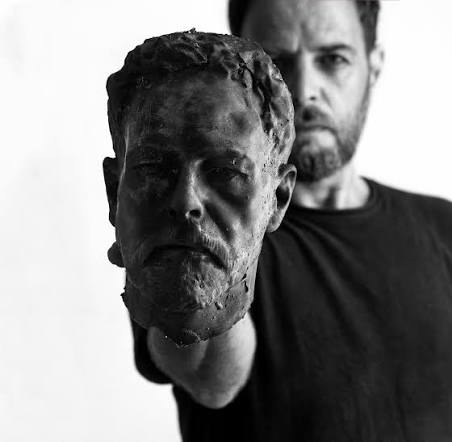
Austin Camilleri (born 1972, Victoria) is a visual artist whose installations, paintings, drawings, sculptures, architectural and video work reflect a deep inquiry into the human condition as it intertwines with the non-human. Rooted in notionsof transience and polarities, this often-overlooked balance breathes a spiritual discernment into his work lumen, a political scrutiny through works like żieme, as well as an environmental sensitivity expressed in disgħa and stones. His work has been shown in the Venice, Mediterranean, Ostrale, and Young Artists’ biennales. He was invited artist at the first edition of the MaltaBiennale, as well as having his work included in La Caixa/British Museum touring exhibition in CaixaForums in Madrid, Barcelona, Seville, Zaragoza and Valencia. His work has also been exhibited at the BOZAR, the Centrale Electrique, Musée Botanique and Place Fontainas in Brussels, Belgium; Anchorage Museum of Art in Alaska and the UN Building in New York, USA; Kalmar Konstmuseum in Kalmar and the WTC in Stockholm, Sweden; the Museum of Contemporary Art, Cluj-Napoca, Romania; Apollonia in Strasbourg, Galerie GNG in Paris and Fondation Villa Datris in L’Isle sur la Sorgue, France; at the ACVIC, Centro de Artes Contemporaneas in Vic, Spain; Palais Liechtenstein in Feldkirch, Austria; the Vatican Museum, Ex-Mattatoio in Rome, Villa Barbaro in Maser, Museo Archeologico in Lipari, Museo Civico in Nichelino, Biblioteca Universitaria in Torino, Biblioteca Nazionale in Rome, Italy; St James’s Palace in London, UK; the Palais des Nations in Geneva, Switzerland; Grote Kerk and NEST in The Hague, Netherlands; Chiesa Santa Chiara, Republic of San Marino; Münchner Künstlerhaus in Munich, Galerie Bagnato and Kulturzentrum in Konstanz, ERA in Trier, Germany; Watergate in Rijeka2020 in Croatia; as well as at the at the Visual Arts Gallery in New Delhi, India, the Henderson Centre in Beijing, China; at Inguat in Guatemala City, Guatemala; in Beith Shemesh, Israel; Garden of Nations in Ramallah, Palestine Territories; at the Palais Kherredine in Tunis and Palais Abdelliya in Marsa, Tunisia and the National Museum of Fine Arts, Maritime Museum, Museum of Archaeology, Il- Ħaġar Museum and Spazju Kreattiv in Malta. Camilleri has curated contemporary exhibitions and collaborated with choreographers, musicians, authors, architects and theatre practitioners across numerous interdisciplinary projects. His work has been featured in international publications and is represented in public spaces as well as publiccorporate, and private collections internationally. He is founding member of StArt and Fundazzjoni Klula, tutors at the Faculty of Built Environment, University of Malta and has been recognised with several awards, including the prestigious Gold Medal from the Malta Society of Arts, the ARTZid International Achievement Award and the Malta Architecture and Spatial Planning Award for Small projects. He currently divides his time between studios in Italy and Gozo, where he is based.